Tatsuro Yamashita
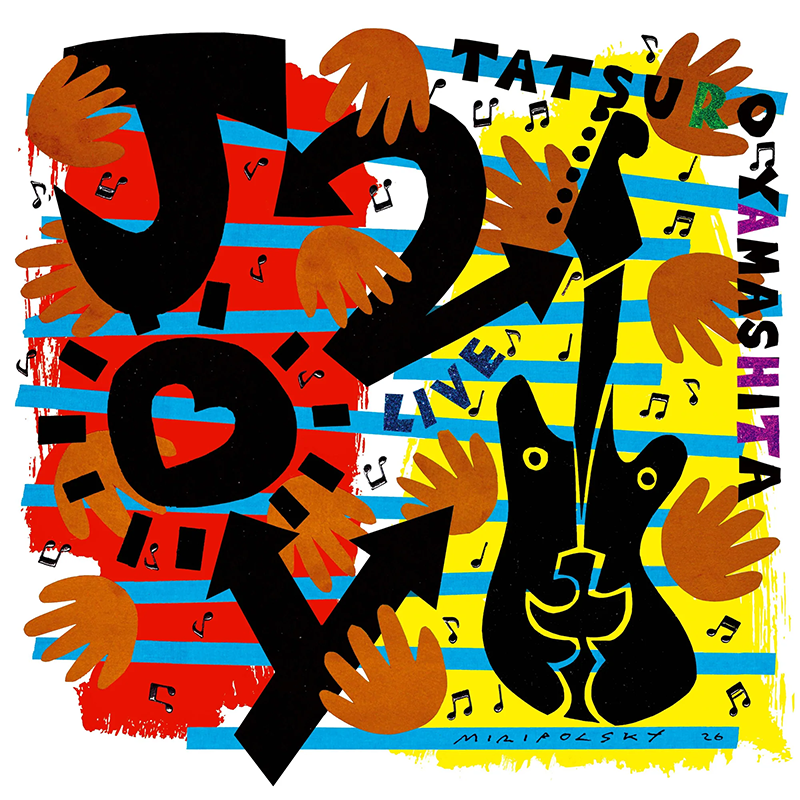
JOY 2 / Opening Notes
Introduction
About a month or so ago, I came across a post about an announcement regarding Tatsuro Yamashita releasing a live album, JOY2. At the time, I was vaguely familiar with his name. I knew of a few songs of his, mostly from seeing them on the internet, but I never dove into his work. Mainly because his works aren’t so easy to come by. Tatsuro believes that streaming music distorts it from its original form and therefore believes that in order to hear music correctly, one must obtain his music via vinyl or CD. It’s a hard stand, but one that comes from a good place. But anyways, I educated myself on a bit of his work and fell for the man immediately. So I was more than happy to take on this assignment and immersed myself in JOY2.
JOY2 isn’t just any other live album. It’s Tatsuro Yamashita’s first live album in 37 years. And for this album, he took it upon himself to handpick each track from over 600 concerts spanning from 2008 to 2025. He placed every one in a particular order to be heard in a particular way. And when I discovered that, I was actually put off by it, to my own surprise. I love live albums. They are the best at transporting you to a time and place you most likely have never been before. But I believe that it should be a single concert experience. I believe that you should hear them open with a number and everything in between each song and set. That’s what transports you there, when you hear them talking to the crowd and bantering with each other on stage. That’s the live part that matters most. But with that being said, Tatsuro arranged it all with the listener in mind and separated it into three discs. Disc 1 stood out the most to me as it gave you the fan favorites as well as an ode to summertime. Disc 2 shows us what Tatsuro and his band sound like when they let loose and open up the floor for more improv and solos. And Disc 3 gives us a peek into the emotional side of a Tatsuro Yamashita performance.
JOY 2 / 01 of 03
Disc One
So here we are, right at the beginning, and Tatsuro is in the driver’s seat leading our experience. And he starts us out with three tracks that must be heard back-to-back. At first, it’s his opening a cappella to garner our attention. Many oohs with Tatsuro in the front of it all. Already setting the stage for the Tatsuro Yamashita experience. It then leads into some of his more popular crowd-pleasers. “Sparkle” kicks in with its ear-catching rhythmic guitar, and we are already eating good, and for seconds, we also have “Daydream” to follow. These two songs pair well together, and you can hear why Tatsuro paired them together. They both start out with a similar rhythm guitar playing, and both songs give Tatsuro plenty of space to put his iconic ad-libs in. Tatsuro loves his belting, I do too, and you can tell that he’s compelled to do it in his music. Like he’s got to get it out no matter how straining on his voice it is.
For Disc 1, there are a lot of summer anthems in place for a majority of the album. Summer starts out with “Door to Summer,” off the Ride on Time album, along with “Daydream.” Setting that summer vibe for us that Tatsuro does so well, we’re right in the groove. It’s just joy for a good time, and he holds us there for a while. You just can’t keep your head still with this one. The sound is so positive and upbeat that you forget why you were upset in the first place.
From there, we move to “Our Summer Dream”. One of the more wishful and passionate tracks. There’s a sound of hopefulness and slight regret in this piece. It’s written in a 6/8 time signature, so there’s more room in the music, and with the drums, it keeps you holding on for the snare to hit. It keeps your attention and makes you focus more on the felt emotion. It adds weight to the song.
Continuing down our summer playlist, we have our summer love song, “Saturday Lover.” What I like about this one is the return of the glockenspiel. Tatsuro’s use of it adds light punches to the melody, and as expected, it doesn’t overcrowd or get lost in the mix of everything else. This song sounds like someone waiting for the night to come so they can see that special someone. The snare drum hitting on the upbeats and the piano playing in a riding motion throughout give it an overwhelming feeling of anticipation. There is also a cool synth solo on there that stood out to me for a beat. It has like an ocarina sound to it. And the way it’s mic’d makes it stand out for a bit. It almost sounds like it was added in afterwards. But, a great song.
“Sync of Summer” is next on the list. And this one is some of Tatsuro’s more recent work. It was released back in 2023 and is proof that he hasn’t lost his touch. Tatsuro has this ear and talent for percussion instruments assisting the melodies and rhythms. To start, we have a marimba starting the melody. The same instrument I learned most of my music education on. As more of the instruments come in, you can hear them carry that same rhythm. The electric guitar especially joins it wonderfully. And also, more bell assistance coming from the background can be heard. This song stands more as a dream of a summer, rather than a memory. There is a sound of wishful thinking, a ‘forever summertime’ as you can hear him say. It doesn’t sound like he’s reminiscing on anything, more so of him painting a picture of what he wants his summer to look like.
The end of our summer anthems ends properly with “Farewell, Summer Days.” Which sounds exactly as you’d expect: a bittersweet goodbye to a memorable summer. There is some grief in the way he carries his words, but they’re still filled with no regret and some anticipation for another summer. It’s the reminiscing sound I was missing from “Sync of Summer.” As it ends, the piano reflects the image of a sun setting and a moon high in the sky as it does what I love so much… resolves.
I’m a sucker for some love songs, and Disc 1 has got some good ones to start us out with. Tatsuro knows how to jam and have fun and shred on the guitar, but he also has a softer part of his soul. And it’s seen and heard more clearly in these tracks.
“Forever Mine” serves as a vow. You can hear him listing his promises. What I love about this piece the most is the strain on his voice throughout it all. You can say it’s from singing all night, but I think it adds weight to the song. He sounds more sincere, as if he’s imagining the person he’s talking to as he sings.
But this next one is most likely my favorite of this first disc. This one REEKS of that Tatsuro imagery and talent. “Only With You” grabs that gutted feeling of losing that special someone. That longing, overdue love that you’ll never get to release, only in dreams and your imagination. It starts out with just his vocals, and that moment when the backup singers come in and fill out the chords… transcendent. I gotta give credit to the bell player during this song too. All you have to keep track of time is the vocals, and you’re the only instrument playing. I would be scared half to death if that was me. So good on them for playing so well and confidently. Something about a man with male backup singers singing about love, be it gained or lost, that really hits the old-school vibe of serenading. And we get some more of that with the song that directly follows.
“I Love You… Part 2” hits that doo-wop oldies sound. And like the previous songs, Tatsuro’s voice straining adds that extra level of honesty and sincerity. This one is blunt. Not too many metaphors here. It’s that levelness that enhances it too. ‘I don’t wanna be clever and talk about forever.’ And he means that: I LOVE YOU. He can obviously go on in some ways about how they were meant to be or how fate brought them together or how the sun has no meaning or etc., etc. But he’d rather just be real and tell you all the things he loves about you.
As our first disc ends, we are given a great send-off. “Circus Town” holds a special place for Tatsuro, as this is the title track to his first solo debut album. Our last song of the night was a lot of people’s first impression of Tatsuro. As we go ‘round and ‘round in Circus Town, we can hear everything that makes Tatsuro and his band so great. That bassline deserves a shout-out as it embodies the ‘round that we go around in. You also get more of Tatsuro’s ad-libbing. The song has a nicely paced, fast groove that goes all the way to the end. But my favorite part of it? Is absolutely Tatsuro singing goodnight to us in that Tatsuro fashion. ‘I wish you have a gooouuouououoooooood niiiiiiggggghhhhttt’. He sounded so honest and happy to sing that part. And he even goes on to say goodbye and announce the name of each musician that we got the pleasure to listen to. That level of connection with his band is such a good thing to hear, and I would love to hear more of that from other artists. It immediately reminded me of Michael Jackson’s Bad Tour, where he did the same thing but would run up to each person to make sure they shared the spotlight. And seeing that comparison from these two major artists who are so intricate and involved in their work sends me such good signs. It’s his vision, but he knows it’s not possible without the dedicated people that surround him.
JOY 2 / 02 of 03
Disc Two
Disc 2 is completely filled with songs that show how he and his band can turn loose. It shows the fun that can be had during concerts and what makes them stand out from their studio counterparts. Where you can create a medley of favorite fan tunes or even have a jam session and get the crowd engaged. And even with all that being said, I think it was a poor choice to compile them all into a single disc. Now, I personally love live albums and tend to prefer them over studio albums. But the idea of gathering all these grand performances onto a single disc unintentionally dilutes them. I mean, each song on here averages about eight minutes, with some being as long as ten minutes. That’s a lot of music! Now, let me be clear: it’s not the idea of long tracks of live playing that I’m opposed to. It’s having them put all on one disc back-to-back for almost ten tracks straight. It was a bit exhausting listening to it in one go. But don’t get me wrong, there are a few shining moments on this disc as well.
“Groovin’” was a pleasant surprise to hear. The Young Rascals cover was rendered very well by Tatsuro and his band. The chord progression was there, but Tatsuro put a new ‘groove’ into it. There’s more space in his version. It gives a lot of space for the band to relax as well as to solo. There is an organ solo that just fits right in with not just the groove, but the feel of the song. It was calm but filled with techniques and precision that can’t go unnoticed.
To end the song, Tatsuro told the band to give him seventy hits. Which is… a lot. For experienced musicians who have been playing for years, I’m sure that’s no difficult feat. But I can only imagine myself up there having to completely lock in and count out loud just to make sure I wasn’t the only guy who would accidentally play that seventy-first note.
The best part of Disc 2 has to be the “Silent Screamer” and “Bomber” medley. To start with “Silent Screamer” absolutely fits this disc’s theme. The studio version off of Ride on Time already features some insane guitar work. But here, we get a killer bass solo. Featuring a bunch of slapping and that harsh string hammering for a bit of a funky flavor. After some guitar shredding, it goes straight into “Bomber,” which loses a bit of intensity from before, but only by a hair. Even still, there’s some great guitar work at hand during this part. There’s a moment where the band quiets down to just the drum kit keeping tempo with just the kick and hi-hat. And it then becomes a battle of the guitars between Tatsuro and Yuji Toriyama. They take turns going back and forth, showing off their skills and even playing with some rhythm modulation that was really cool to hear in the moment. They even went into an Earth, Wind, & Fire piece, “Sun Goddess”, which is what really raised it up a bar for me. And then after all that, they go right back into “Silent Screamer”. And that moment is why live performances are so wonderful. That was an experience for everyone involved: the band enjoying themselves on stage, the crowd getting to enjoy hearing new renditions of their favorite music, and us at home getting to listen to it all on these few discs.
Even though this disc’s biggest drawback was the lengthiness of each track, it still held true to its intentions. It still was the let-loose experience. My most crucial point is that it needs to be spaced out for a performance. All of these are great tracks and great experiences, but to bunch them together severely dilutes their impact. What’s so important about a concert is experiencing it from start to finish. The opening, the intermission, the closing number, all of it plays a role. So to take multiple similar moments and play them all together takes all that away.
JOY 2 / 03 of 03
Disc Three
To wrap up our live journey with Tatsuro, we begin with Disc 3. With my first few listens, I’ve come to the conclusion that this disc has a bit of a soft start. While the songs do have that Tatsuro feel to them and have a groove that is easy to follow, they feel more like fillers to me. Nothing stands out in them, and they benefit more in a concert setting as transitions into the bigger moments.
It’s not until we are halfway through the disc that we get more of the passionate side of the music. The music starts to sound more grounded, and it feels like there’s more of a spotlight shining down, like it’s the highlights of the nights.
“Soubou” is where I started getting into the disc. With the previous track serving as its intro, we are given a vibe change. A piano to lead us into a passionate and sincere song where you can feel Tatsuro singing to the crowd. There’s a gospel aspect to the song as well. It’s heavily infused with emotion, similar to a moment in prayer. The whole band is pulling on the crowd to self-reflect and dive into themselves. The piano and other keys play warmly in the middle to give the air a sense of welcoming. The guitar cries during its solo. Even the backup vocalists with their “la, la, las” are asking you to become involved with the moment. It’s definitely one of those songs that has got everyone swaying in the crowd with their lighters up in the air. The best part of this communal experience is when he sings to the crowd his own rendition of “This Land Is Your Land.” Spreading equality ‘from Hokkaido to the Senkaku Islands’. It’s a great moment where music does this one thing so well of bringing us all together. Where unity can be felt both in the moment and years later being played from a CD.
I am a big fan of Tatsuro’s sound. From the rock tunes to the city pop beats. But I think his voice and talent can be heard at their best during his love ballads. And “Zutto Issho sa” plays next to prove that point. After uniting everyone’s souls, he now goes for the heart with this love song. Tatsuro’s voice is so full and prominent that it carries the weight of his words so well. For this song in particular, he is the sole writer of the lyrics. So he’s not just singing, but making a personal testament. These lyrics serve also as vows to his loved one. I will always love the weariness his voice carries, and he uses it well as he sings.
After the lovey-dovey fades, we get put back into that Tatsuro groove with “Koukiatsu Gaaru”. We get right back to the backup vocals giving us rhythm in a doo-wop style while leaving space for Tatsuro to come in. And as the rest of the band kicks back into gear, we are back to our regular program. My favorite part of the song is when the music stops and Tatsuro starts his belting and ends it on a note with the rest of the band, and it sounds like the song is ending, but then the band picks it right back up with a few chord changes. And then they’re back to jamming. It’s a cool feeling and is such a hype moment that shows just how much fun the band had playing up on stage.
To wrap up both the album and the disc, we have “Ride on Time.” One of his most iconic pieces of music. It stays rather loyal to its studio version, but to be honest, it’s a hard song to beat. Even with the live feel, I still feel the studio version tops its counterpart. It’s relatively the same thing, right until the end, where we get some of that classic Tatsuro ad-lib. The one thing I was hoping for was to hear the a cappella that you get at the end of the studio version. Unfortunately, it wasn’t done in this performance. Which is really a bummer because I believe that, with all we’ve heard from him so far, he would’ve gotten really into it and would’ve given us quite the ending.
What we did get was our classic ending, which is always good to hear. Tatsuro belting until his vocal cords die out while also throwing in some random animal noises. Again, not the ending I was hoping for with such a big song. But what we got was still very much Tatsuro Yamashita.
I think this disc didn’t give us the ending the album deserved. Which is a bit unfortunate with this being handpicked by Tatsuro himself. We still have a lot of great music spread across three whole discs. But the overall concept of the album has been lost due to the fact that every song is picked from a large number of performances instead of one single continuous performance. And perhaps that’s just a preference of mine, and perhaps you like the idea of having the best of the best of seventeen years’ worth of performances. Nevertheless, I think we can all agree that a lot of heart and soul went into this album: years of practicing and getting everyone in sync, new music coming out at the same time, the weighing strains of touring, and even down to Tatsuro sitting down and listening to 600+ concerts and using his ears to pick out the best for us to enjoy.