Tatsuro Yamashita
[review-body]
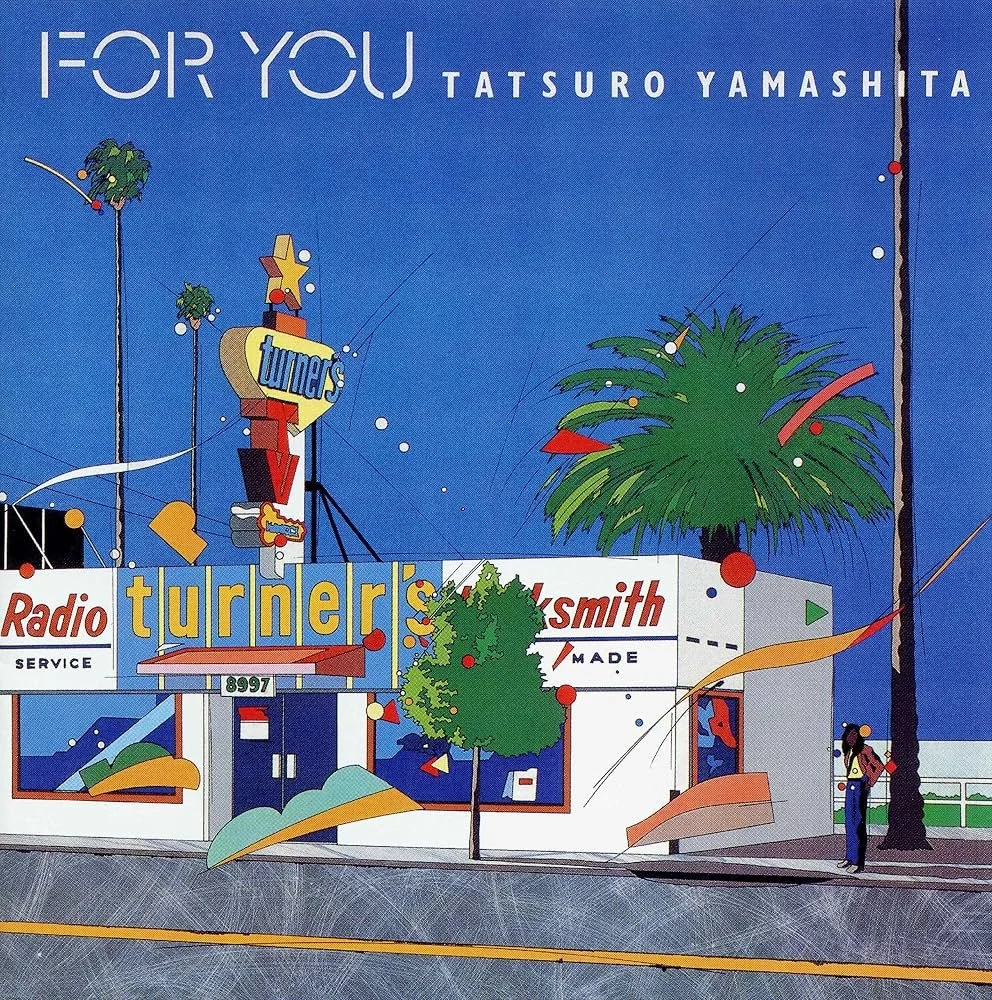
Tatsuro Yamashita has a deeply impressive catalog of music that touches on many eras and styles over the years. his career is prolific. yet even among his greatest albums some of my favorite music by Yamashita comes from the minor alleyways between his main works. his album Big Wave and his music for both anime films Mirai (Mirai of the Future) and Summer Wars come to mind as standouts among this greater catalog. the deeper you dig into his discography, the more you are likely to find so much more to love and appreciate about his music. whether it be his style, his relentless optimism, or his effortlessly charming voice. but before we go there, i think it is important to start at the start, with one of his most well-known releases, For You.
it is quite the toss-up for best album between For You and his other, arguably even more well-known album, Ride On Time. these two albums exist as giants among the greater city pop genre and the wider Japanese music industry as a whole. for me, For You edges out Ride On Time by a hair, if not a few strands. this is not merely an album, but, to many, the album. there is definitely a respect around For You in the various communities, and there is an equal respect from me. i may have a greater personal enjoyment of his side projects, but i cannot deny what this album has done for bringing a love of Japanese music to this side of the planet, and to me as well. today, we look a bit further into what that juggernaut looks like, and why it might be a better album than even Ride On Time. in my opinion, of course.
i’m being a bit grandiose, of course. this is just an album after all, and actually quite a small and personal piece of work in the grand scheme of music. what works best about For You is its lovey-dovey, articulate, swooning, very human angle towards music. there is something just so singularly special about his voice, his crooning and offbeat style that comes through his music to the listener. even from a parasocial aspect, i feel like i can come to understand his outlook, his way of life, just from his music alone. add on top of that a spectrum of genres from jazz and funk to R&B and pop, and the picture of For You’s success comes in a bit clearer. even today, the album stands up by itself in a timeless sort of way. love stories and saxophones retain a timeless quality.
the album is packed with all-time, defining hits, with only a couple coming in the rearview, and only one in the dust. it would take less time to discuss the tracks that don’t work for me as well as the others. however, i think it perfectly fine for the album to breathe and take a moment through these weaker tracks. the contrast between what really truly shines is all the more apparent after the various interludes and weaker songs. this contrast is what specifically highlights the bright gemstone-esque sparkle (ahem) of some of Yamashita’s most iconic tracks.
“Amaku Kiken na Kaori” is actually a pretty groovy beachside tune, but never touches the caliber of the rest of the album. yet, perhaps still one of the more underrated tracks on the album. “Every Night”, a bonus track, also registers even a bit lower in my appreciation. it ends the album well, but never leaves the same lasting impression as the others. last, “Hey Reporter!” is outright abrasive. where so much of the album lives in this evening glow of romance, this track feels like a bull in a love shop. the power guitar screeching and the gangly, loose attitude of the track feel almost drunken. but the worst offender is that it doesn’t seem to justify its length past 2 minutes, as it repeats itself far too long. an instant skip each time. while i could ponder its curious inclusion on the album, i’d rather call it a day and move along. because there are more exciting things to get to. beyond here, the album soars.
i think my first real turnaround on the album, years ago, was with “Love Talkin’ (Honey It’s You)”. the track really makes a statement, feeling both fresh and bouncy; it brings out that funk aspect of the album. the opening arrangement underlies the rest of the song while Yamashita endearingly exclaims, and sings without fear, “HONEY I LOVE YOUUUU!”. it surpasses dorky and somehow finds solid footing among the overly dramatic chorus singers. the sprightly harp strings sparkle off with joy in the background. Yamashita’s proclamations only become more prevalent and normalized throughout; his expression becomes reality. the song makes the album incredibly inviting. while the other tracks discussed here might be the stronger pieces, it’s “Love Talkin’” that gets me excited to come back every time.
“Futari”, however, has slowly come to reign as my favorite song on the album. the smoky parlor piano that opens the song is just a lure, a trap, to entice the listener into the explosive vocals Yamashita is about to unleash over the track. it is the defining moment of the album, if not his career. his sweeping vocals are the cornerstone of For You. “Futari” is a swelling, hair-raising performance that defines his work as an artist. on the side, the rest of the instrumentation only accentuates his performance. the percussion drives the song with a powerful beat; it gives the music patience, and a sudden lack of patience, throughout the song. piano punctuates the flittering emotion, tapping in here and there as a release valve over so much pent-up passion. “Futari” is not only a timeless love song but a classic across the great history of music. i love how unafraid it is to let loose, to exist, an extension of Yamashita’s abilities. “Futari”, above all of For You, for me, drives home, without a doubt, the great pull of Tatsuro Yamashita. “Some people want to fill the world with silly love songs. And what’s wrong with that?”
“Sparkle” has the most modern pull of the album. somehow, some 30+ years later, the song feels just as new, just as exciting, as it ever has. even today, against Yamashita’s reticence to release his music on streaming platforms, “Sparkle” has received a modern music video that melds today and yesterday together. the song just hasn’t aged. there is a lot going on here, there is a lot to talk about. the instruments in use, their performances, the harmony between them, the explosive yet focused body of the song, Yamashita’s iconic voice at work. it all comes together in one full maelstrom of song that never goes off the rails or loses what it intends. i especially love the trumpeting saxophone blaring throughout over the crisp metallic guitar work that underlines the song. it’s a damn strong start to an album. there is something so magnetic about Yamashita’s voice as it trails and echoes off. of all the performers i’ve ever heard, certainly no one sounds like him. Yamashita alone carries the song through instant audible charisma.
“Music Book” almost feels like a B-side track in comparison, but manages to solidify the album’s state of prominence. it may be because of its more relaxed atmosphere, sandwiched between these all-star songs; the contrast does a lot of heavy lifting to maintain For You. “Music Book” feels just as robust as the rest of the album, but utilizes its pieces for a more chilled-out style. it remains an important part of For You by expanding on Yamashita’s arrangements and style to explore further what makes his sound so enticing. the album really succeeds by letting its secondary tracks ease the listener into Yamashita’s world.
rounding up the album are “Morning Glory” and “Love Island”. in the same way that “Music Book” helps to emphasize For You’s greatest aspects, so do these tracks. they further explore this summertime, laid-back outlook on music. by giving time to let the instruments talk and converse with each other, they help flesh out further the identity of the album.
when i think on the modern reach of city pop, the fervor over Yamashita’s work, the rise in universal enjoyment of Japanese music, all roads seem to, eventually, lead through For You. maybe that is a truth for music in general as well... no matter where you go, how you get there, at one point or another, even as a simple enjoyer of music, you will, inevitably, come by For You. there are a great many albums that have a lasting, forever-flavor of accolades and respect. the best of the best. of those, there are plenty that i listen to and simply do not enjoy. which is okay; subjective taste is ultimately the conclusion when it comes to music. even so, For You feels above even these. that is not to say there is not music more impressive, articulate, unique, or personal. but as an everyman, a giant everyman, Tatsuro Yamashita seems to feel more accessible and enjoyable than any of these highly lauded artists and albums. in this aspect, Yamashita’s For You feels like a great success for music universally. that may feel like a large proclamation, yet it’s not meant to be. good music is good music. and that factor always makes up for failings, and helps better connect people together. Yamashita may not outplay Beethoven, and “Sparkle” may not outshine “Billie Jean” or “Stairway to Heaven”, but i don’t think they need to. For You feels personal, and it feels profound because it does what it does so well. better than most. it may just be pop music, it may just be love songs, yet, to me, this is not any detracting offense, but the major benefit. i would much rather champion music like For You over all those stuffy, super important albums any day. it’s the natural charisma, the sheer talent, and the ability to profess love as a joy instead of a burden, that save the album. For me, For You is one of the most important albums i’ve heard to date, not just for Japanese music.
[review-footer]
Highlights
FUTARI
SPARKLE
LOVELAND, ISLAND
LOVE TALKIN’ (Honey It’s You)
Tracklist
SPARKLE
MUSIC BOOK
INTERLUDE A Part I
MORNING GLORY
INTERLUDE A Part II
FUTARI
LOVELAND, ISLAND
INTERLUDE B Part I
LOVE TALKIN’ (Honey It’s You)
HEY REPORTER!
INTERLUDE B Part II
YOUR EYES