TOKYO SNIPER
RYUSENKEI
genre: city pop/ soft funk • release date: 2006
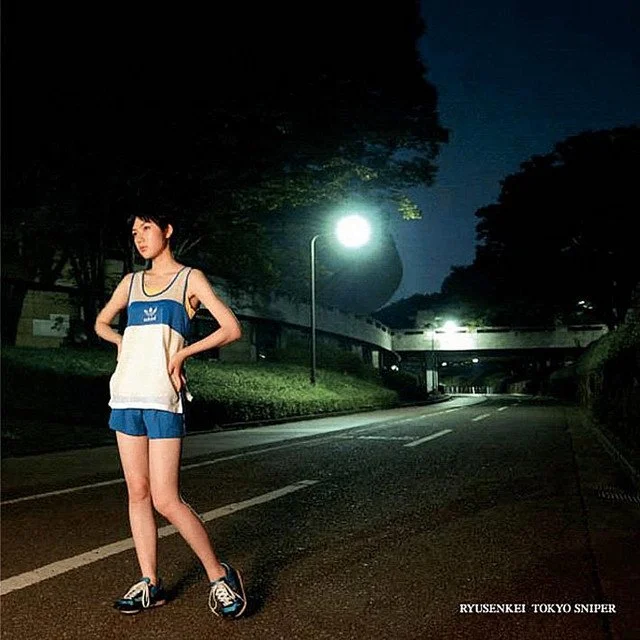
i think it important to discuss some of these albums’ legacies when reviewing them on “rewind”. see, TOKYO SNIPER is a particularly well loved album across the canon of (at least) American appreciation for Japanese music, especially within the realm of city pop. time and again i’ll see mention of this album in forum after forum. that’s a pretty niche scenario, but one that feels important to The Sagasu Review. it feels like an important part of the story to albums like this, which have gained recognition long after release. in “rewind”, the conversation may center on the context that these albums have picked up along the way. TOKYO SNIPER’s context is a modern glimpse into an era long past. in an attempt to capture this era with care, RYUSENKEI has resolved the yearnings of a new generation. a chance for younger people to engage with this alluring kind of sound. however, a new context has accumulated. in recent years of city pop revival a new door has opened to much more in the way of music discovery and creation. the genre itch is easier to scratch then ever before. does TOKYO SNIPER stand the test of time today, or has it become diluted in a sea of the brilliant old and the refreshing new?
put plainly, TOKYO SNIPER has my respect, but not my love. over the years i have only ever desired to be part of the crowd to adore this work. yet time and again, i’ve found myself bouncing off it. for reasons i think are valid, but may not apply to everyone, perhaps only me! within the album’s 9 track run, is an identifiable sound, one that surely says “this is RYUSENKEI!", but also a sound i find to fall flat. even reading into the careful creation of the album, it screams to me like a piece of work i should only love more, by its rich layers of history and sound. it’s this kind of attention to detail that usually makes my geek-brain tickle. the kind of background that i would love to bore others with equally long explanations. for others, i am sure it already is. an aspect of the work i want to recognize. however, i think it falls a bit flat over the course of the album, struggling to maintain the kind of verve i desperately want it to have.
it starts with a terrific pace. “Time Machine Love” really locks in to what makes the album its own best. bossa nova meets funk, with a gorgeous bass line driving the song through. particularly, it’s when Nica Eguchi’s voice (HITOMITOI) meets the bristling vintage synth keyboards that the magic of the song comes to life. its a terrific sound that soars in excitement. a strong message to the core of the album, this will be a revival, a joyous one. it feels like the kind of song that RYUSENKEI has identified themselves on. the sound they have crafted themselves from, for all the following years to come. the song is an instant classic, highlighting both sides of TOKYO SNIPER, the voice and the composition. an important duality to the creation of the album, one side trusting the other to hold up the sound, as the other does the voice.
Nica Eguchi a noteworthy stamp placed deliberately and firmly on each track. her voice is engaging, soft, and also a bit disconnected, giving the album an identifiable texture and feel. for some, it will be the absolute highlight of the experience. however, there are times it falls flat. for as much as i love her voice (i really really do), it can also lack harmony with the music. seemingly an intentional choice, but one that i sometimes wish had a different partner. i often think of ROUND TABLE and Nino, their particular harmony reaching a golden unison by backing each others’ strengths and covering each others’ weaknesses. at some points, like in “Usu Murasakiiro no Kanata”, RYUSENKEI antagonizes itself. both parts of this duo attempting to maintain spotlight over the other half. it’s not a sound i like to revisit, and one that usually bounces me off the album by its midpoint. my largest complaint of Eguchi’s voice primarily being that it is so distinctive it can dictate a song rather than adapt to it. i know what she is going for here, but some songs she becomes too identifiable, arresting attention from the interesting compositions of the album.
it seems most composing credit goes to Kunimondo Takiguchi, so i’ll address it as his work here. throughout i can feel his inspiration and attention detail. a wide range of compelling instruments being utilized across the album, some of my personal favorites being the various synth keyboards and harmonicas. they give the album distinct 70’s feel. i can almost smell the cigarettes and yellowing plastic. i really enjoy this aspect of the album, it’s here that it becomes the icon status it has achieved to be today. it also becomes its own downfall in some ways. on the fourth track “Koi no Last Number”, a buoyant Rhodes piano carries the underlying current of the song. this makes it a novel track itself, let alone for the album as well. if you think of TOKYO SNIPER or RYUSENKEI, you are bound to think of “Koi no Last Number”, a sign of its unique performance. however, this is effect becomes diluted when it shows up again in “TOKYO SNIPER”, to much lesser effect. while i’m not hinging the album’s reception on this aspect alone, it feels indicative of what makes the album feel watered down in its mid to late section. there is a same-ness that wears the experience thin in this later half. the novel tricks used in the first handful of songs, regurgitated in the later half, leave the album feeling much less powerful than it could have.
“Ame no Cinderella” is perhaps my favorite song of the album, one that transcends the experience. it hits the mark that the opening song made promise on eight tracks ago. the feeling of an era of music, from decades past, reborn in modern times. the soft bubbling horns, an appropriate 70’s hallmark, give the final song a fulfilling sound and feeling. it’s one of those long songs that never actually feel long, it feels like the appropriate length, which leaves me wanting just one more play. a personal favorite hallmark in music. if you had only showed me the first and final track, i would tell you the rest of the album must be a surefire hit.
here is where i become frustrated with TOKYO SNIPER. over many years and many plays of the album, i come back to one primary issue. i always bounce off the middle. i could (and have) attempted to dissect these problems, but whatever the reasons are, the fact remains. no matter what words i type here, the fact remains. TOKYO SNIPER feels like something profound is about to take place, a rare and well considered creation, from start and finish. it nearly keeps this promise. the composition and the vocals are unique and strong enough on their own that this should be a done deal. i adore Eguchi’s voice and i greatly respect Takuguchi’s attention to detail. i can see precisely where many people have fallen in love with this album time and time again, and time again to come. it came late enough to be a loving tribute to an era gone, it came early enough to feel special, cool even. for me, that simply is not enough.
i will admit that TOKYO SNIPER has begun to feel like a pivotal piece of media as time has progressed. even in my own prolonged internal contention with the album, it has slowly layered itself into my perceived identity of Japanese music as a whole. i wouldn’t go so far as to say it is the revolutionary piece that it has been hailed as for years till now, but i know when to acquiesce. it is an album worth listening to, one that will maintain its importance (or grow in) for years to come. i have my problems with it and that’s okay. sometimes a work can rise above its own quality. importance and personal affections are not the same thing.
written by
Marcus Landeros
- highlights -
Time Machine Love 「タイムマシーン・ラヴ」
Hanabira 「花びら」
Koi no Last Number 「恋のラストナンバー」
Ame no Cinderella 「雨のシンデレラ」
track list:
Time Machine Love 「タイムマシーン・ラヴ」
Hanabira 「花びら」
Rainbow City Line 「レインボー・シティ・ライン」
Koi no Last Number 「恋のラストナンバー」
Usu Murasakiiro no Kanata 「薄紫色の彼方」
TOKYO SNIPER
DANCING INTO FANTASY
Spring Rain 「スプリング・レイン」
Ame no Cinderella 「雨のシンデレラ」