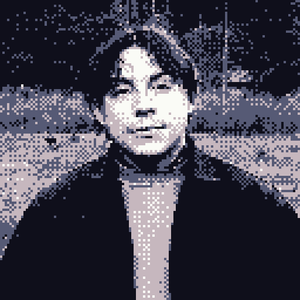
Koji Kondo
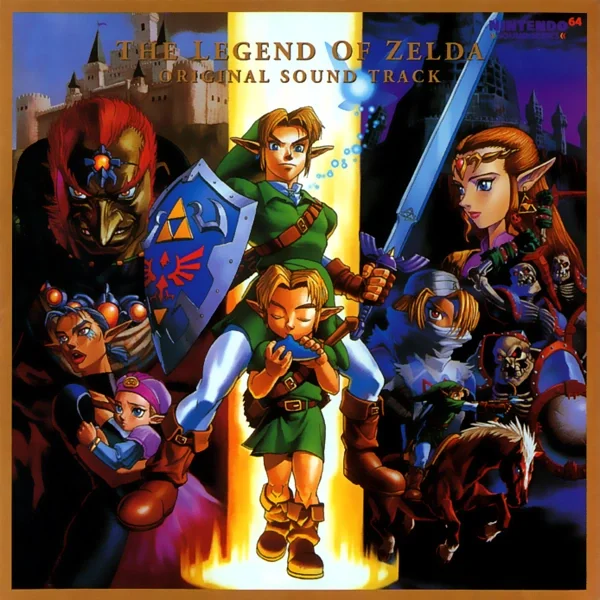
[review-body]
when i think back to my childhood, like most people who might read this, i think often of the music in the video games i played. when i had first seen The Legend of Zelda: Ocarina of Time, i was about six at the time, visiting a friend’s home. and sometimes, if i was lucky, i would get to watch his older brother play through the game. and even though i rarely got to play myself, there was something far beyond my comprehension going on at the time. sitting there as a child, watching Link pull the Master Sword and grow into adulthood, wielding that cool sword and vanquishing all kinds of zombies and evil... nothing makes you want to grow up faster than that. so i could own my own N64, so i could be an “adult”, so i could play the adult game. so i could go up to the sword, pull it, and become adult Link. one thing was for sure, that sitting there, watching my friend’s brother play, was everything to me.
Koji Kondo has long been a composer for Nintendo. even to this day, his work might be more recognized than most people even realize. through most of Mario and Zelda, his influence has long been heard and felt in these franchises, if not the lives of many people today. in much the way that Studio Ghibli’s Joe Hisaishi or Final Fantasy’s Nobuo Uematsu have impacted far beyond their industry, Kondo remains with them to this day. it’s one thing to be a composer for Zelda, a career-defining achievement, but to compose for the series’ most iconic game is another. and to come from a game that is intrinsically tied to the themes of music and their power is another layer entirely deeper. these three parts create a powerful legend in and of itself around the composer.
the greatest piece of intrigue for me is the album’s composition. anyone who has played the game knows the Ocarina mechanic. five notes can be played in any order; the correct order makes a predetermined composed song, and these songs influence and change the world in-game. Kondo was tasked to compose 12 songs that would use this five-note scheme as the foundation for his music. i am a firm believer that limitations lead to a greater product, so it is no wonder that some of the most iconic pieces in this game come from the core 12 songs played by the user in-game. this leads to 12 songs that create affinity with the player through continual use and intentional activation. but probably most interesting of all is how this is a rare moment when music influences how the game is played. not as mere window dressing to become atmosphere, but a true core mechanic.
take “Saria’s Song”, the core of “The Lost Woods”, for instance. it’s a playful, jaunty tune that is so easy to memorize you could whistle it almost without realizing. the core of the song evokes the five notes playable in the game, yet the song spreads out much farther to include the atmosphere of the game world. or how the music of the local Lon Lon Ranch can be squeezed down to “Epona’s Song”. the song is found by meeting a young girl at night, who sings to herself and her horse. by traveling through time (in-game, of course), the song becomes the identity of the place, but also of the person, of your relationship with them. the mechanic, the music, becomes the story and the action. an important part of what makes Kondo’s music grow deeper roots in the audience than, arguably, any of his other works or those in video games, period.
of course, the soundtrack reaches far beyond this restriction. some of the greatest songs in video game history are present. the “Title Theme”, which iconically plays over the title screen, is perhaps the greatest piece of the game itself. the melancholy seeps through the lonely piano and the ghostly, distantly felt ocarina. for many people, i’m sure, just the opening few notes of the song are intricately synonymous with a handful of particular moments in youth. the themes of youth, of aging, are the foundations of the game and of the title music itself. where the sadness meets wistfulness, a collision of the bitter twinge of memory itself. when i hear the song myself, i can feel the plastic gold cartridge in my fingers, i can see the title screen play out with Link riding his horse at dusk, i can hear the tone that plays when you “PRESS START”. i can remember where i was sitting in my friend’s living room, where he sat, where my sister sat, the pillow i sat on, and the smell of dinner cooking in the kitchen.
most people (and me) go nuts for the theme of “Gerudo Valley”. it has a weary-traveller-in-a-strange-land-about-to-kick-some-ass kind of feel to it. the Spanish guitar and the fast-paced motion of the song are instant ear-catchers. the song has long been famed for its rule of cool and has long been appreciated for its clear sense of atmosphere. arguably, the most played and covered song in all of Zelda history.
the “Temple of Time” is one of the ones that took me when i was young. the cathedral choir sings vaguely somewhere, just in the next room. it’s not what they’re singing about, but how they do it. the piece is a holy and reverent one. it shrouds the moment of walking into that temple and seeing a sword in the stone, like that of Arthurian legends, ready to be pulled by the right person. of course, every person dreams of being the one to pull the sword from the stone. by doing so, you grow into a capable adult, the wielder of the destruction of evil. in the restraint of the song is some of the soundtrack’s greatest power. it displays Kondo’s ability to grasp at emotions both vague and instinctive to us as people. to do so with such limited technology goes beyond impressive.
when i talk about the music for Ocarina of Time here at The Sagasu Review, i do so almost as a formality. of course, there are others out there, many, who have dissected and essayed Kondo’s work further, deeper, and with greater acuity than i ever could. but it feels important, even for me, to put my own small remark on his work. with my own limited vocabulary and scope of the medium, i still found it important to talk about it myself. because i’ve had my own personal relationship with the work. like most people, in the general aspects of influence and nostalgia, and unlike most people, in the specifics of these moments. with all my love for music and all the range of it, Kondo’s work on Ocarina of Time has been some of the most important to me.
when i look back at the soundtrack for Ocarina of Time, i’m surprised by a couple of things. above all, i’m surprised by how timeless it remains today. and that’s not a pun. there is something incredibly singular and evocative about the work itself, well outside the realms of nostalgia. it maintains an identity of dark fantasy and goofy exuberance. it’s an iconic work that holds up extraordinarily well today. but secondly, beneath this, i’m surprised by how it feels coming back to it as an adult. in its own way, there is a magic of time travel happening here as well. but now from a different perspective. now i’m the adult. now i own the game console, now i own the game. but now i have to cook the dinner too, and go to the job to pay for the console. now i look back at young Link, at the start of the game, and find innocence and childhood again. now there is a version of me wanting to go back the other way. to sitting in front of the TV before dinner and watching in awe over something i’ve never known before. in a game about time travel between childhood and adulthood, Kondo’s work is some of the closest i’ll have to putting that sword back in the stone.
[review-footer]
Highlights
Title Theme
Lon Lon Ranch
Lost Woods
Temple of Time
Windmill Hut
Gerudo Valley
Tracklist
Title Theme
Enter Ganondorf
Deku Tree
Fairy Flying
House
Kokiri Forest
Open Treasure Box
Item Catch
Small Item Catch
Shop
Battle
Inside the Deku Tree
Boss Battle
Boss Clear
Heart Container Get
Legend of Hyrule
Spiritual Stone Get
Fairy Ocarina Get
Hyrule Field Main Theme
Kepora Gebora's Theme
Market
Shooting Gallery
Hyrule Castle Courtyard
Enter Zelda
Ocarina (Zelda's Lullaby)
Zelda's Theme
Ocarina (Epona's Song)
Lon Lon Ranch
Mini Game
Kakariko Village
Ocarina (Sun's Song)
Hyrule Field Morning Theme
Goron City
Ocarina (Saria's Song)
Lost Woods
Dodongo's Cavern
Middle Boss Battle
Dinosaur Boss Battle
Zora's Domain
Great Fairy Fountain
Potion Shop
Inside Jabu-Jabu's Belly
Ocarina (Song of Time)
Temple of Time
Open Door of Temple of Time
Master Sword
Ganondorf's Theme
Chamber of the Sages
Medal Get Fanfare
Sheik's Theme
Horse Race
Horse Race Goal
Ingo's Theme
Escape from Lon Lon Ranch
Kakariko Village Orchestra Version
Ocarina (Song of Storms)
Windmill Hut
Minuet of Woods
Forest Temple
Bolero of Fire
Fire Temple
Ice Cavern
Serenade of Water
Water Temple
Nocturne of Shadow
Prelude of Light
Shadow Temple
Gerudo Valley
Spirit Temple
Requiem of Spirit
Kotake & Koume's Theme
Meet Again Zelda
Game Over
Ganon's Castle Bridge
Ganon's Castle Underground
Inside Ganon's Castle
Ganondorf Battle
Escape from Ganon's Castle
Last Battle
Seal of Six Sages
Ocarina of Time
End Credits