[review-body]
“Ikinokori Bokura” certainly has some great favorability with me over the years. for a long time growing up, i only considered Japanese music to be the kind you find in anime. which is great music! but definitely of a certain variety, especially in the shounen range. it wasn’t until this song that i had a moment of realization that Japanese music isn’t just for anime but also of any and all varieties of music. in this case, folk. which feels like a shallow realization now, but was a pretty big deal all those years ago. for that, “Ikinokori Bokura” was a song that opened my world to the possibility that people are making music at many levels. and just because the lyrics are Japanese, doesn’t mean it can’t have mass universal appeal. in many ways, this song fits right into all the 2016, pine tree, American folk music playlists i’ve built over the years. right along with Bon Iver and José González and so on. alone, the track stands as a single monument to the accessibility of “foreign” music here in the West. i still can’t think of many better examples to share to any first-time listener when they ask me for a song that makes me love Japanese-based music so much.
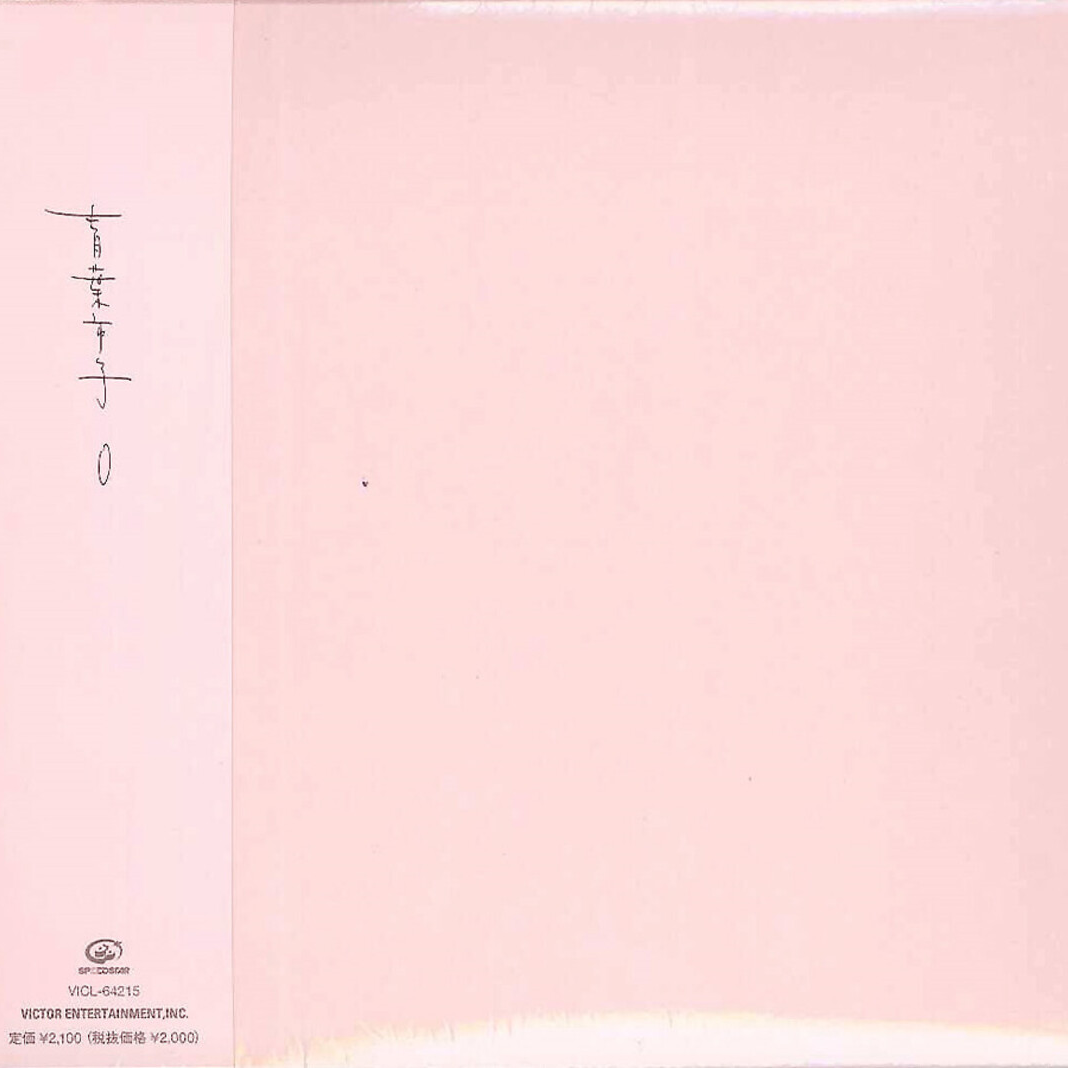
with this hope, for more, i came to Ichiko Aoba’s 0. i’ve certainly enjoyed the pieces of music i’ve picked up over the years from here, especially Windswept Adan. 0 was a lot of what i anticipated, a strong realization of one woman’s music represented by mostly a guitar and a voice. which makes it a very accessible experience. she has so much personality working with so little; i’ve certainly heard more complicated productions from other artists that felt quite hollow in comparison. i wanted to take a moment to really appreciate what she has done here. her music has an impressive range of feeling and story that unfold throughout the many minutes of her album. sometimes slow and incredibly deliberate, other times fast-paced and a bit hectic. it’s a very personal journey that unfolds throughout 0, one that should be visited by anyone that is a fan of music. it feels especially prescient of her, knowing that this album was released in 2013, somewhere just around our favorite song “Harlem Shake,” but especially nearby the success of The Lumineers. she was onto something well before the world knew of it. “Ikinokori Bokura” being one of her very best, if not the very best, to this day. her delicacy and intimate touch on each note over the guitar and her voice retain their gravitational pull even today.
so now i’m just gonna sit down and give it to you straight. it took me a while to come to the right feeling that this album largely did not work for me. which is a truth i tried hard to find my way around. there are two ways i feel the album can be approached. as a more passive listening vibe piece, or as a more avant-garde and expression-focused work. yet in the first way, i find it too jarring, too stop-and-go, too avant-garde and expressive to be a passive listening piece. yet too passive and gentle to be taken only as a full-on artistic expression of self. i simply had a hard time putting it on in the background while i cook and clean; it became too abrasive and jarring at times. yet i also found it too deliberately meandering and patient (with two 12-minute tracks) to be a focused piece of expression. which is a tough distinction to be placing criticism on. even after trying to find a way to word it just right to leave misunderstanding off the table, i fear this will still breed misunderstanding.
after the appropriate speed and pace of “Ikinokori Bokura,” the album feels especially prepped to continue this divine track record. just more of this and i’ll be very happy. yet i find “iam POD (0%)” and “Mars 2027” the worst songs of the album, leaving the train with extremely little steam after it has just left the station. the songs feeling much too artistic and freeform for their own good. i found on every play-through, i was skipping off to a new album or artist well before “Mars 2027” had ended. this leaves “Iriguchi Deguchi,” a decent song on the album, to barely have any energy left to support the experience. and so a similar pattern plagues the rest of the album. ironically ending on another of the album’s best tracks “Haru Natsu Akifuyu.” the album is a terribly uneven listening experience.
centering back on “Mars 2027,” she elicits a sort of unnerving emotion in the song at the 50-second mark that reminds me a lot of the Jaws theme song. the song remains a bit antagonistic throughout the remaining 7 minutes. coming in fast, slowing down, going out loud, then quieting down to a whisper. the herky-jerky nature of the song ends up becoming a nuisance, like a mosquito; it’s by the 2.5-minute mark that i want to turn it off. i’ve had about enough. and by the time the song quiets at the 3-minute mark, i’m internally hoping it is finished. it is not. it’s not that a bad song can kill an album, and it’s not a song i would call outright bad. Aoba’s magic still lingers over parts. it’s here that i become confused on the intention of the work. is this a passive experience or a tour-de-force? it sure does not work as both.
through the rest of the album, i begin to think brevity and constraint work best for Aoba. “Uta no Keihai” is merely 2 minutes, but does a much stronger job of managing the atmosphere of the album. infinite runway should not be a license to use it all. a focused Aoba works better for me, even when she meanders with a purpose.
that said, i do appreciate “Kikaijikake no Uchuu” for building off the presence of “Ikinokori Bokura” even if it is the album’s longest runtime. it has a sense of purpose and place in 0. i can hear the story she is telling; the various parts come together as a whole. the song makes a point for passive enjoyable listening.
Aoba’s vocal playfulness and emotional range are her greatest assets. the guitar is merely the vehicle to present this talent. her little effects with bird-like whistles, her sing-song cheeriness, her ability to make Japanese lyrics sound French café are all impressive adornments to her music. ones that make it feel singularly like Ichiko Aoba. there is only one well like hers to drink from. as well, her instrument work is quite simple, but i think it belies a deeper mastery. i could hardly imagine the way she plays so effortlessly up and down the guitar could be defined as a “simple” skill.
coming back around, Ichiko Aoba’s music has personally done immense heavy lifting in justifying Japanese music as a universally accessible brand of music. maybe less so today with so many great new and flourishing artists and a more globally interconnected industry by internet and streaming. yet for me, that history with her work is important. 0 is an album that wants to live between two styles of music, but cannot decide which. by living in the middle, it becomes a split and less productive experience. it becomes difficult to enjoy. yet even if i found her defining album, 0, to be outside my range of enjoyment, i can still wholeheartedly recommend the album. even today, i still use “Ikinokori Bokura” as there are plenty of moments it trips and gets lost, but that does not diminish its overall ability to be universally accessible folk. that is its superpower.
[review-footer]
Highlights
Ikinokori Bokura 「いきのこり●ぼくら」
Iriguchi Deguchi 「いりぐちでぐち」
Kikaijikake no Uchū 「機械仕掛乃宇宙」
Tracklist
Ikinokori Bokura 「いきのこり●ぼくら」
iam POD (0%)
Mars 2027
Iriguchi Deguchi 「いりぐちでぐち」
Uta no Kehai 「うたのけはい」
Kikaijikake no Uchū 「機械仕掛乃宇宙」
Shigatsu no Shitaku 「四月の支度」
Haru Natsu Aki Fuyu 「はるなつあきふゆ」